What You Skip Is Who You're Becoming

Photo by Photo by farhan anisa on Unsplash on Unsplash
Everybody talks about their most-played songs. The tracks they've logged a hundred times, the albums they'd take to a desert island, the artists they'd follow anywhere. That's the comfortable conversation — the one where your taste is a trophy you get to display.
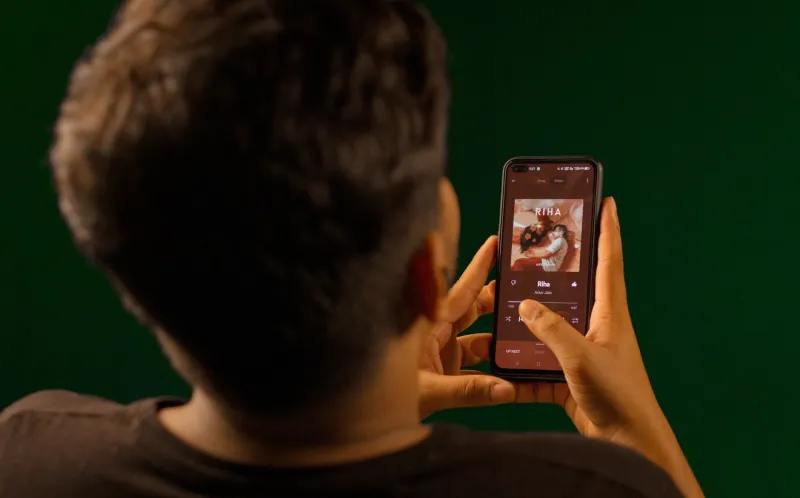
But flip it around. Think about the last ten songs you skipped. Not the ones you don't know — the ones you know and still couldn't get through. The ones where your thumb moved before the first chorus even landed. That list? That's a different kind of portrait. And it might be more honest than anything in your favorites.
Skip patterns are the dark matter of music logging. We don't talk about them much because they don't feel like achievements. But they map something real — something about where you've been, who you used to be, and the quiet, sometimes uncomfortable ways you're changing.
The Skip as a Verdict
A skip is a fast decision. It happens in two or three seconds, often before your conscious brain has even caught up. You recognize the opening notes, something in your body registers a response, and your thumb acts before you've thought it through. That speed is actually what makes skip behavior so revealing — there's no time to perform. No time to decide what kind of listener you want to be. It's just a raw reaction.
And what that reaction is telling you, more often than not, is something about where you are right now versus where you were when you fell in love with that song.
Music taste isn't static. Everyone knows that intellectually. But it's jarring to feel it in real time — to hit play on something you used to adore and feel... nothing. Or worse, something mildly embarrassing. Like running into an old version of yourself at a party and not knowing what to say.
The Ex-Anthems Problem
Let's start with the most obvious category of skipped songs: the ones tied to specific relationships or periods of your life that you've outgrown or needed to leave behind.
Every JukeLog user has them. The breakup album you listened to on a loop for six months that you now physically cannot hear without a full-body cringe. The hype songs from a friend group that fractured. The genre you were deep into during a chapter of your life that you've deliberately closed.
Skipping these songs isn't avoidance in a psychological-damage sense. It's actually a healthy form of self-protection and, in some cases, self-definition. You're not that person anymore. The song belongs to a version of you that no longer exists, and hearing it is like being handed someone else's diary. Technically yours, but deeply uncomfortable.
The interesting thing is when you log these skips — or at least notice them consciously — you start to see the shape of your own evolution. The skip list becomes a timeline of selves you've moved through.
Genre Drift and the Skips That Signal It
Sometimes the skip isn't about a memory or a person. It's purely sonic. You used to be someone who loved a particular sound and somewhere along the line, without any dramatic announcement, you stopped being that person.
This is genre drift, and it happens to almost everyone. The pop-punk obsessive who can't make it through a verse of their old favorites without feeling vaguely itchy. The hip-hop head who started spending more time in ambient and jazz and now finds their old playlists weirdly exhausting. The country fan who went indie and can't quite explain when or why.
These drifts are usually gradual. You don't notice them in the moment. But your skip behavior catches them before your self-concept does. You're still identifying as someone who loves a certain kind of music long after your actual listening has moved on. The skip is the tell. It's your taste sending a memo your brain hasn't read yet.
Tracking what you skip — especially within genres or artists you used to claim as core to your identity — is one of the more useful forms of self-knowledge available to a music logger. It answers the question "who am I, musically?" not with the aspirational answer, but with the real one.
The Generational Skip: When the Music of Your Moment Ages Out
There's a particularly American experience tied to the music of your adolescence — the stuff that soundtracked high school hallways and summer jobs and the first time you drove alone at night. For a while, that music feels timeless because it's wrapped up in memory. Then one day it just sounds like what it is: the music of a specific time, made for a specific version of you, by artists who were also a specific age.
And you skip it.
Not because it's bad. Not because you hate it. But because the person it was made for — the you from fifteen years ago — isn't who you're trying to be today. The skip is a gentle but firm closing of a door. You can still respect what's behind it. You just don't need to walk through it every day.
This is different from the cringe-skip or the grief-skip. It's more neutral. Almost peaceful. The musical equivalent of looking at an old photo and thinking, "yeah, that was real, and I've moved on."
Logging What You Leave Behind
JukeLog is built on the idea that your music history is worth preserving — that what you listen to tells your story. But here's an extension of that idea worth sitting with: what you stop listening to tells your story too.
The songs you skip aren't failures. They're not embarrassments. They're evidence of movement — proof that you're not the same person you were when you first hit play on them. Growth doesn't always feel triumphant. Sometimes it feels like your thumb moving across a screen before a chorus can even start.
Pay attention to those moments. They're not nothing. They might be the most honest data in your whole library.