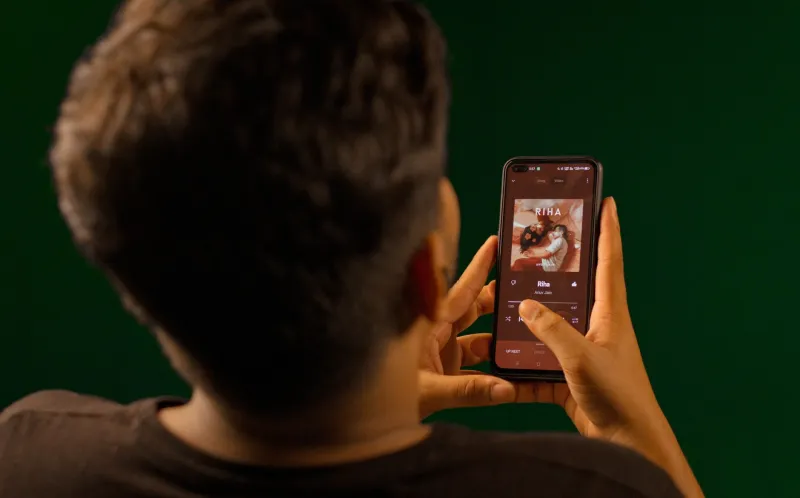
Still Playing: Why We Keep the Playlists of People We've Lost

Photo by Photo by Virginia Marinova on Unsplash on Unsplash
There's a playlist sitting in Marcus's library that he hasn't opened in three years. It's called "Sunday Drives with Dad" — 47 songs, a mix of classic rock and old country, the exact stuff his father used to crank in the truck on the way to nowhere in particular. Marcus's dad passed in 2021. The playlist has not been touched since. It has also not been deleted.
"I don't even know if I could," Marcus told us. "It would feel like throwing something away that I can't get back."
He's not alone. Across JukeLog's community, one of the quietest but most emotionally loaded behaviors we see is the preservation of playlists and listening logs tied to people who are no longer here. These aren't just collections of songs. For a lot of users, they're digital shrines — fragile, invisible, and absolutely irreplaceable.
When a Library Becomes a Memorial
Most of us think about music logging as something we do for ourselves. We track what we're into, build out our taste profiles, share the songs that define our weeks. But grief has a funny way of reframing all of that. When someone dies, every song they recommended, every playlist they built together with you, every track they played on repeat during the holidays — it all gets reclassified in your brain as something sacred.
Psychologists have a term for this kind of object: a "continuing bond." It's the idea that grief doesn't require us to let go of the dead, but rather to find new ways of staying connected to them. Music, it turns out, is one of the most powerful mediums for that. Songs carry sensory memory in a way that photographs and text messages simply can't replicate. Hit play on the right track and you're not just remembering someone — you're almost with them again, at least for a few minutes.
That's why the idea of deleting these playlists feels so viscerally wrong to so many people. It's not irrational. It's actually a very human response to the very real fear that forgetting is a form of abandonment.
The Songs You Never Skip (Even When They Wreck You)
Here's the thing that's interesting from a music-logging perspective: these memorial playlists often sit completely untouched for months, sometimes years, but users almost never remove them from their libraries. They occupy this particular emotional real estate — too painful to listen to casually, too precious to let go of.
Occasionally, though, something shifts. A birthday. An anniversary. A random Tuesday when the grief shows up uninvited. And that's when the playlist gets opened, often for the first time in a long time. Users describe these sessions as almost ritualistic. You don't shuffle. You don't skip. You let it play the way it was meant to play, because that's the closest thing to respecting the person who built it.
Jenna, a JukeLog user from Nashville, logged a playlist her late college roommate had made for a road trip they took in 2018. "She died in 2020. I listen to that playlist every year on her birthday," Jenna wrote in our community forum. "It's 2 hours and 12 minutes long and I listen to every single second. It's the most I ever cry all year and also somehow the best I feel all year."
That paradox — the playlist that destroys you and heals you simultaneously — is something grief counselors recognize immediately. Music activates both the emotional and the autobiographical memory systems in the brain at once. You're not just feeling sad; you're remembering specific moments, specific versions of yourself, specific people in their fullness. That's an extraordinarily powerful thing to hold in a music app.
Logging as a Form of Love
One of JukeLog's core ideas is that the act of logging music is itself meaningful — that tracking what you listen to tells a story about who you are. But when you're logging in the shadow of grief, that story gets a co-author.
Some users have started intentionally logging the songs associated with their loved ones as a way of making their memory part of the permanent record. It's a subtle but profound shift. Instead of those songs just floating in a playlist somewhere, they get woven into your listening history. They become part of your documented musical life. In some small way, the person you lost stays in the log.
There's something genuinely moving about that. JukeLog wasn't designed as a grief tool — it was designed for music discovery and sharing. But the community has found a way to use it for something deeper. The act of quantifying and preserving listening history turns out to be surprisingly well-suited to the work of remembrance.
Why Deleting Feels Like Losing Them Twice
If you've ever stared at a playlist tied to someone you've lost and felt unable to hit delete, you already understand this on a gut level. But it's worth naming explicitly: removing those songs from your library can feel like a second death. Not because the songs themselves are the person — but because they're the last living record of a shared world that no longer exists.
The playlist is proof that the relationship happened. That the Sunday drives were real. That the road trip was real. That the person was real and loved music and shared it with you because that's what people do when they love each other.
Deleting it doesn't just clear up storage space. It erases a witness.
So they stay. The playlists nobody plays and nobody removes. Sitting quietly in the library, right between your workout mix and your dinner party rotation, holding a weight that no algorithm can measure.
Log it. Keep it. Some things in your music history aren't about taste at all — they're about love that doesn't have anywhere else to go.