Discover Weekly Is Watching You: The Creepy Genius of an Algorithm That Knows Your Taste Better Than Your Best Friend
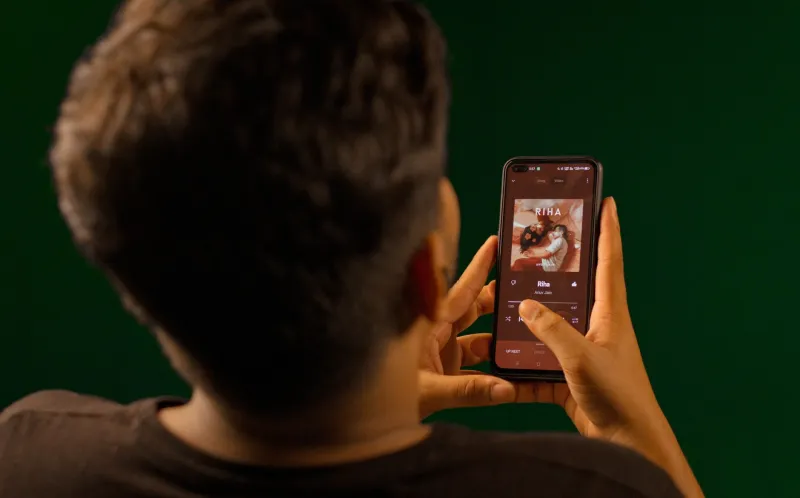
Every Monday morning, before you've had your coffee, before you've made a single conscious decision about who you are or what kind of day you're going to have, Spotify has already made one for you. Thirty songs. Fresh. Waiting. And at least a third of them are going to hit in a way that makes your skin prickle a little, because you didn't ask for them, you didn't search for them, and yet — somehow — they're exactly right.
That's Discover Weekly doing its thing. And if you've been logging your listening on JukeLog long enough, you've probably noticed something unsettling: the algorithm isn't just guessing. It's reading you.
The Machine Behind the Monday Magic
Let's talk about how this actually works, because the mechanics are worth understanding before we get into the philosophical weirdness.
Spotify's recommendation engine draws from three main data streams. First, your personal listening history — every play, skip, replay, and save you've ever registered on the platform. Second, collaborative filtering, which essentially means the algorithm finds other users whose listening patterns mirror yours and then borrows from their libraries. Third, natural language processing, where Spotify's crawlers analyze blog posts, reviews, and social media chatter to understand how people talk about certain artists and songs.
The result is a system that doesn't just know what you've listened to. It knows how you listened to it. Did you skip that track at the 45-second mark every single time? Did you replay that bridge three times in a row at 11pm on a Tuesday? Did you add a song to a playlist you titled something painfully revealing like "sad hours" or "3am drive"? All of that is data. All of it feeds the machine.
And the machine is frighteningly good at its job.
When the Playlist Knows Before You Do
Here's where it gets genuinely strange. A lot of JukeLog users have talked about moments where Discover Weekly surfaced an artist they'd never heard of — someone totally off their radar — and within a week, that artist became a full-on obsession. Not because Spotify manufactured that obsession, but because the groundwork was already there in their listening data, invisible to them, perfectly legible to the algorithm.
That's not discovery in the traditional sense. That's more like... excavation. The algorithm isn't introducing you to something foreign. It's showing you something that was already latent in your taste, already implied by the sonic fingerprint of everything you've ever logged.
Which raises a question that's worth sitting with: is that a good thing?
On one hand, yes, obviously. You're finding music you love. Your Monday is better. Life is incrementally improved. On the other hand, there's something a little destabilizing about realizing that your taste — something you probably think of as deeply personal and self-determined — is, at least partially, predictable. Mappable. Outputtable by a recommendation engine that doesn't know your name, your face, or a single thing about your actual life.
The Comfort Trap Hidden in Your Recommendations
Here's the part that deserves more scrutiny than it gets.
Discover Weekly is personalized, but personalization has a ceiling. The algorithm learns from what you've already done, which means it's fundamentally backward-looking. It can extrapolate forward, but only along trajectories that your existing data suggests. It's not going to throw you a genuinely wild curveball — say, recommending a Norwegian black metal album to someone who exclusively listens to indie folk — because that's not how the model works. It optimizes for engagement, and engagement means serving you something familiar enough to like but different enough to feel like discovery.
That's a very specific kind of manipulation. Not malicious, exactly, but it is a narrowing. The algorithm is quietly, consistently pulling you toward the center of your own taste rather than toward its edges. It's confirming who you already are rather than challenging you to become someone slightly different.
For music lovers who care about genuine discovery — the kind that actually changes you, that introduces a genre you'd never have found on your own — this is a real limitation. The algorithm is great at finding you the next thing you'll like. It's not particularly interested in finding you the thing that will blow your mind and rearrange your entire relationship with sound.
What Your Logged Data Is Actually Revealing
If you're using JukeLog to track your listening habits alongside your Spotify activity, you might have already noticed some uncomfortable patterns. The songs you log most frequently, the ones you return to across months and years, tell a story you didn't necessarily choose to tell.
Maybe you log a lot of music about leaving. Maybe your most-played tracks cluster around a specific two-year period that you don't talk about much. Maybe the genre you publicly claim as your favorite barely shows up in your actual play history, replaced instead by something softer, something more vulnerable, something you'd be mildly embarrassed to have recommended to a new friend.
The algorithm sees all of that. It doesn't judge it — it can't — but it does respond to it. And its response is Discover Weekly, a playlist that is, in a very real sense, a mirror. Not a flattering one. Not a curated one. Just an honest, data-driven reflection of who you've been when no one was watching.
That's the part that makes people uncomfortable. Not that the algorithm is wrong. That it's right.
Reclaiming the Wheel (At Least a Little)
None of this means you should distrust Discover Weekly or stop using it. It's a genuinely useful tool, and the music it surfaces is often legitimately great. But it's worth approaching it with a little more awareness than we usually do.
Treat it like a conversation rather than a prescription. When a track lands perfectly, log it, love it, share it — that's the whole JukeLog ethos. But also push back occasionally. Deliberately seek out music that the algorithm wouldn't predict for you. Log the weird stuff. The experimental stuff. The album a stranger on the internet swore changed their life. Give the machine something it didn't expect, and see what it does with it.
Because the most interesting version of your musical identity isn't the one the algorithm already knows. It's the one you're still in the process of figuring out.
And that part? That's still yours.