Whose Taste Is It, Anyway? How the App You Use Is Quietly Writing Your Music Story
The App in Your Pocket Has an Opinion About You
Here's a question worth sitting with: when was the last time you found a song completely on your own? No algorithm nudging you toward it, no autoplay queuing it up, no fifteen-second clip ambushing you between videos. If you're struggling to remember, you're not alone — and that's kind of the whole point.
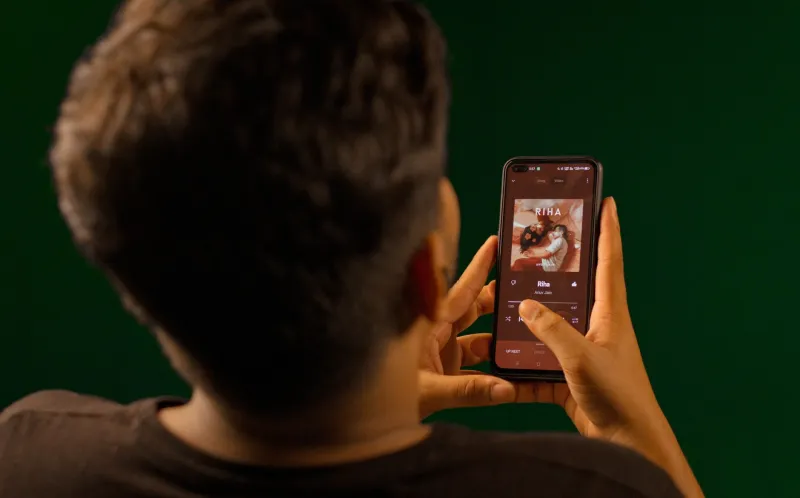
Most of us have picked a streaming home base and settled in. Maybe you're a Spotify loyalist who lives inside Discover Weekly like it's a second bedroom. Maybe you're an Apple Music person who swears the editorial playlists are more human, more considered. Or maybe your entire musical worldview has been rebuilt from the ground up by TikTok, one trending sound at a time. Whatever your platform allegiance, here's the uncomfortable reality: the app you chose didn't just give you access to music. It gave you a specific version of music — curated, filtered, and served through a particular lens that's been quietly shaping your taste ever since.
At JukeLog, we talk a lot about logging what you love and owning your listening history. But it's worth asking what you're actually logging — your genuine preferences, or the preferences the algorithm handed you and you accepted without much pushback.
Spotify's World: The Algorithm as Best Friend (or Overprotective Parent)
Spotify is the largest streaming platform in the US, and its recommendation engine is legitimately impressive. Discover Weekly, Release Radar, the endless parade of Daily Mixes — it's a system built to keep you inside a loop of songs that feel familiar enough to enjoy but fresh enough to feel like discovery.
The problem with a loop, of course, is that it's a loop. Spotify's algorithm is fundamentally reactive. It learns what you've already liked and serves you more of it, gradually tightening the circle. If you went through a two-week indie folk phase in 2021, there's a real chance your mixes are still haunted by banjo. Power users who actively seek out new genres, follow artists outside their comfort zone, and manually build playlists tend to have richer, more diverse libraries. But casual listeners — the ones who just hit play and let it ride — often end up in a surprisingly narrow sonic world they didn't consciously choose.
Spotify's social features also push your listening into a kind of semi-public performance. Your friends can see what you're playing. Your Wrapped recap gets screenshotted and shared every December. There's a subtle pressure to have a listening history that looks cool, cohesive, or at least explainable. That pressure isn't imaginary — it genuinely affects what people play, and by extension, what they think they like.
Apple Music's World: The Curator's Touch (With Strings Attached)
Apple Music has always positioned itself as the more human alternative. Real editors build playlists. Radio shows with actual DJs. A system that leans more on your existing library and purchase history than on real-time behavioral data. For a certain kind of listener — one who values intentionality and wants to feel like they're being treated as an adult with taste — it's a genuinely compelling pitch.
But Apple Music's ecosystem comes with its own gravitational pull. It integrates tightly with your iTunes history, which means if you bought a lot of classic rock in 2009, the platform remembers. Your musical identity on Apple Music is partly a product of your past self's purchasing decisions, which is a strange kind of nostalgia trap. The platform also skews toward listeners who are already fairly engaged — people who actively seek out music rather than waiting to be served it. That's great for depth, but it can create blind spots around newer, more viral-native artists who are building their audiences elsewhere.
Apple Music listeners tend to log and share differently too. There's less built-in social infrastructure, which paradoxically can make the listening feel more private, more personal. Whether that means it's more authentic is a whole other conversation.
TikTok's World: Where the Song Comes Before the Artist
And then there's TikTok, which has essentially rewritten the rulebook on music discovery for an entire generation of listeners. TikTok doesn't care about your listening history. It doesn't build a profile of your taste over months and years. It just fires content at you based on what you engaged with in the last twenty minutes, and if a snippet of a song made you pause your scroll for three extra seconds, that's enough to send you down a rabbit hole.
The TikTok effect on musical identity is fascinating and a little disorienting. Songs go viral before albums exist. Artists become famous on the basis of fifteen seconds of a hook. Listeners often know a track intimately — every word of the chorus, every beat drop — without knowing the artist's name, their back catalog, or anything about where the song came from. It's music as pure sensation, detached from context.
For platforms like JukeLog, this creates an interesting challenge. When you log a song you discovered on TikTok, are you logging a genuine connection to that music, or logging the memory of a viral moment? Both are valid — but they're different things. TikTok-driven taste is often wide and shallow, a constantly refreshing surface layer rather than the deep roots that come from living with an artist's full body of work.
Navigating the Fragments Without Losing Yourself
Most serious music listeners aren't living in just one of these worlds. They're bouncing between all three, plus YouTube rabbit holes, Bandcamp deep cuts, and whatever a friend texted them last Tuesday. The real question isn't which platform is better — it's whether you're steering your own taste or just going wherever the current takes you.
A few things worth thinking about: When you log a song you love, do you know why you love it, or just that the algorithm kept putting it in front of you? Are the artists you follow on your JukeLog profile ones you genuinely sought out, or ones who kept showing up until you gave in? Is your listening history a map of your curiosity, or a receipt for someone else's recommendations?
None of this is a reason to rage-quit your streaming apps. The algorithms aren't villains — they're just very good at their jobs, which is keeping you engaged, not keeping you growing. The work of building a real musical identity in 2024 means using these platforms deliberately. Seek out what the algorithm wouldn't think to show you. Log the weird stuff, the old stuff, the stuff that doesn't fit your usual vibe. Follow artists because you're genuinely curious, not because they're trending.
Your Log Is the Proof
Here's the thing about keeping a listening log: it holds you accountable in the best way. When you look back at what you've actually been playing — not what you wish you'd been playing, not what your Wrapped made you look like, but the real, unfiltered history — you start to see the shape of your taste more clearly. You see the algorithm's fingerprints. You see the TikTok phases. You see the Apple Music nostalgia loops.
And then, if you want to, you can start writing a different story. One that's actually yours.