Your Setlist Is the New Scrapbook: Inside the Rise of the Concert Log
Somewhere in a shoebox at your parents' house, there's a ticket stub with the ink half-gone. You can maybe make out the venue, the year if you squint. The opening act? Gone. What songs they played? Not a chance. That stub was supposed to be the memory. It never really was.
Now flip to the other end of the spectrum: the friend who posts a photo of the setlist taped to the venue's stage door twenty minutes after the encore, timestamped, geotagged, and logged. Annoying? Maybe a little. But that person is building something the shoebox never could — a running record of every night live music wrecked them, in order, with receipts.
Concert logging is having a moment, and it's not hard to see why. Streaming gave us a perfect record of what we listen to at home. Live shows were the last untracked frontier — until fans started tracking them themselves.
Why the Memory Needs a Backup
Here's the uncomfortable truth about seeing a show: your brain is the worst possible archivist. You'll remember the emotional peak — the chorus everyone screamed, the surprise guest — and lose almost everything else. Which album the tour supported. Whether that was the night the singer scrapped the second verse. The name of the opener who absolutely stole the room.
A log fixes that. And the payoff compounds. Three years into keeping a show history, you can scroll back and watch your own life in setlists: the breakup show, the reunion trip show, the Tuesday night you bought cheap seats on a whim and got converted into a lifelong fan. It's a museum where every exhibit is a night you didn't want to end.
There's also a quieter benefit nobody talks about: opening acts. Log every gig and you build a paper trail of artists you saw before they were anybody. Few flexes age better than "I saw them in a 400-cap room in 2021, and yes, I have the setlist."
The Merch Tee Test
Souvenirs have a shelf life problem. The $45 tour shirt survives maybe twenty washes before it's sleepwear. The vinyl lives on a shelf. The stub lives in a drawer. None of it captures the actual thing — the show.
A log captures the show. It's also free, weighs nothing, and can't be left in a hotel room in Phoenix.
What to Capture at Every Gig
Want the memory to outlive the merch? Here's the checklist:
- The setlist (or a photo of one). If the venue tapes one to the stage, that's your gold. Otherwise, sites like Setlist.fm let fans crowdsource the running order within hours.
- The opener's name. Future you will thank present you when that artist headlines an arena in four years.
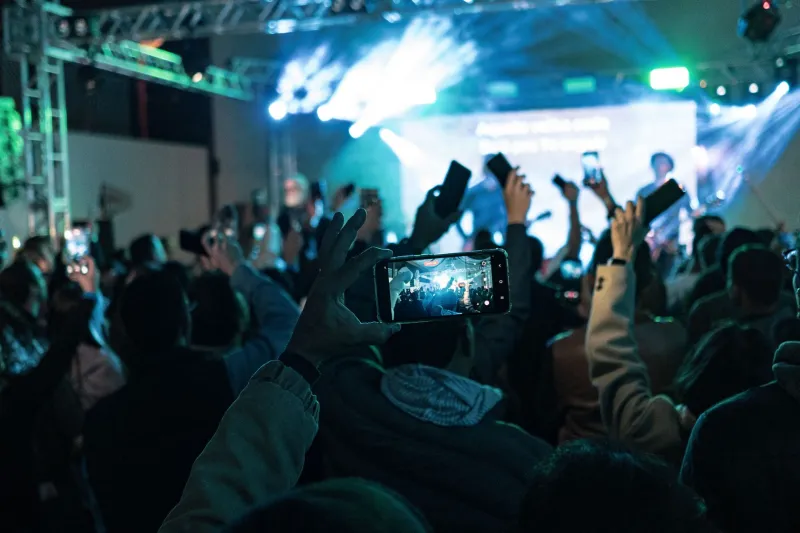
- One photo of the room, not the stage. Everyone has a blurry photo of the artist. Almost nobody has a shot of the crowd from their seat — the part that actually felt like the night.
- Who you were with. Names, even just first names. Shows are social artifacts, and the people are half the memory.
- The surprise. The cover song, the monologue, the technical difficulty that turned into a story. One line is enough.
- The seat and the price. Nosebleeds for $30 hits different than the pit for $300. Future you deserves the context.
- A rating, if you're brave. Not every show is a five-star show, and a log that only says nice things is a scrapbook, not a record.
From Souvenir to Story
The shift happening right now is a mindset shift. A generation raised on year-end listening recaps looked at their concert history — the most expensive, most memorable part of their music life — and realized it was living nowhere but faulty memory and a drawer full of fading paper.
So they started logging. The setlist photo is the new stub. The show journal is the new scrapbook. And unlike the shoebox, this one is searchable.
The merch tee will shrink. The stub will fade. The log only gets better — because every new show gives the old ones more to say.