The 11:58 Club: What Your Last Song of the Day Is Really Saying

Photo: PattayaPatrol, CC BY-SA 4.0, via Wikimedia Commons
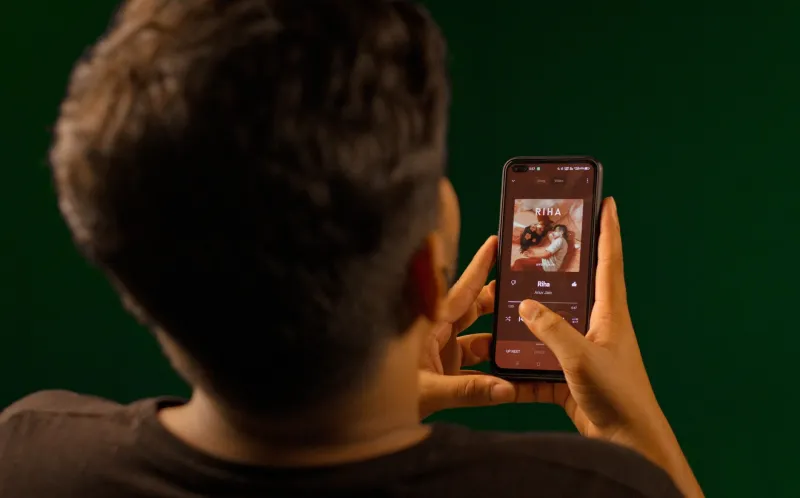
There is a special kind of JukeLog entry that happens at 11:58 p.m. It is not the careful, curated log of a Sunday afternoon. It is not the discovery log of a commute. It is the last-minute, lights-off, phone-in-hand entry that says: I remembered. I am still here. And this is what my day sounded like at the end.
Late-night logging is its own genre. It has its own panic, its own melancholy, its own weird little rituals. And it might be the most honest part of your entire listening history.
The Streak-Saver
Let us start with the least romantic version. You are almost asleep. Your eyes are closing. Then you remember the streak. You have logged a song every day for 214 days, and you are not about to let a Tuesday ruin it. You grab your phone, open the app, and tap the first thing you see. A song you have played 90 times. A song you do not even like that much. It does not matter. The streak survives.
The streak-saver is easy to mock, but it is also revealing. It shows that logging has become a habit, maybe even a comfort. The entry is not about the music. It is about showing up. There is something human in that, even if the song choice is utterly meaningless.
The Melancholy Repeat
Then there is the other 11:58 entry: the song you have played on repeat for an hour because you cannot quite name what you are feeling. It is not a random tap. It is a loop. The same chorus. The same bridge. The same three minutes over and over while the day winds down.
Late-night repeats are often about emotion that has not found words yet. The track does the work. It holds the ache, the relief, the weird loneliness of being awake when everyone else is asleep. Logging it is a way of saying, this is what the day was. Not the meeting. Not the errands. This.
The Last Track Tells the Truth
Morning music is aspirational. You queue something energetic because you want to be energetic. Afternoon music is practical. It is the soundtrack to work, traffic, laundry. But the last song of the day is different. By 11:58 p.m., the performance is over. You are not trying to impress anyone. You are not curating for a follower. You are just trying to get the day down.
That is why the final track often says more than the first. It is the emotional summary. It is the receipt. A cheerful song at midnight can mean genuine contentment. A sad song at midnight can mean the day was heavier than you let on. A chaotic song can mean you are still buzzing. A repeat can mean you are stuck.
A Diary With a Play Button
In a way, late-night logging turns JukeLog into a private diary. The entries are timestamped. The songs are specific. If you scroll back through a month of 11:58 p.m. logs, you can see patterns you did not notice in real time. The week you played the same artist every night. The night you logged nothing. The sudden burst of upbeat songs after a quiet stretch.
That is not just data. It is a mood map. It is a record of how you were doing, written in choruses and bridges. The songs are not the whole story, but they are a reliable index.
Routine and Emotion in the Same Entry
The midnight log holds two things at once. It is routine and it is feeling. The streak-saver is routine. The melancholy repeat is feeling. Most of us bounce between the two. Some nights we log just to keep the chain alive. Other nights we log because the song is the only thing that makes sense.
Both are valid. A music log does not have to be deep every day. It just has to be yours. The 11:58 entry is a small confession either way: this is what I had left at the end of the day.
So if you find yourself logging in the final minutes, pay attention to what you choose. Not for the algorithm. Not for the followers. For the pattern. Your midnight songs are telling you something. You just have to be awake long enough to hear it.