Why Your Streaming History Is the Most Honest Thing About You (And Why That's Terrifying)
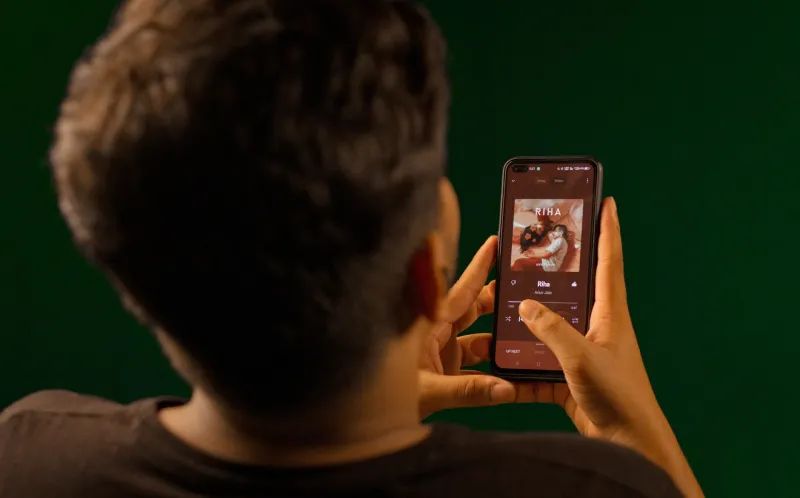
Picture this: you hand your phone to a friend so they can pull up directions, and for one horrible second, you watch their eyes drift toward the "Recently Played" section of your music app. Time slows down. Your stomach drops. Because sitting right there at the top — between a perfectly respectable indie album and a jazz playlist you added to seem cultured — is the Kidz Bop version of a Lizzo song you've been streaming unironically for three weeks.
Welcome to the guilt shuffle.
It's that specific, low-grade panic that comes from knowing your actual listening habits and your carefully maintained musical identity are two very different things. And if you've ever frantically closed a streaming app before someone could see what was playing, you're in very good company.
The Gap Between Who You Are and What You Stream
Most of us carry around a mental image of our music taste — the version we'd describe at a dinner party or list in a dating profile. Maybe you're a indie rock person, or a hip-hop head, or someone who's really into underground electronic stuff. That identity feels real and meaningful.
Then there's what you actually play at 11pm on a Tuesday.
Researchers who study music psychology have a term for this: the social desirability bias applied to taste. Basically, people consistently overreport listening to genres they perceive as prestigious (jazz, classical, literary singer-songwriter stuff) and underreport the music they genuinely reach for during emotional or low-stakes moments. The gap between "what I say I like" and "what my Spotify Wrapped will reveal" can be enormous.
JukeLog users know this tension intimately. It shows up every time someone logs a song and then second-guesses whether to make that log public. It shows up when you build a profile playlist that looks nothing like your actual listening week. The platform makes that gap visible in a way that's both liberating and deeply uncomfortable.
The Genres That Get Hidden Most
Not all music shame is created equal. There's a pretty clear hierarchy of what people tend to hide versus what they'll proudly display, and it tracks closely with cultural prestige.
Pop music — particularly the bubbly, radio-ready, maximally produced variety — sits near the top of the shame list for a lot of listeners over 25. There's an unspoken cultural rule that says enjoying pure pop past a certain age means you haven't developed "real" taste. Which is absurd, but here we are.
Country, especially the mainstream Nashville variety, carries its own complicated shame for listeners outside that community. People who grew up with it often feel embarrassed reclaiming it. People who discovered it accidentally feel like they have to explain themselves.
Early 2000s hits occupy a weird zone — nostalgic enough to be acceptable in ironic doses, but if you're genuinely, sincerely playing Nickelback or early Nelly Furtado on the regular, that still feels like a confession rather than a flex.
Kids' music and movie soundtracks round out the list for parents especially, who often find that their most-played tracks are technically from animated films, and who are not entirely sure how much of that is "for the kids."
How Algorithms Learned Your Secrets Before You Did
Here's where it gets a little unsettling. Streaming platforms aren't just passive observers of your shame spiral — they've been actively learning from it and using it to pull you deeper.
The recommendation engine doesn't care about your curated public image. It only cares about what you actually play, how long you play it, whether you skip it, and whether you come back. So when you sheepishly let that one guilty-pleasure track run all the way through instead of skipping it, the algorithm notes that. When you replay it twice at midnight, it definitely notes that.
Before long, you've got a personalized radio station built entirely from your most embarrassing impulses, serving you more of exactly what you told yourself you didn't like. It's the musical equivalent of your browser history — a brutally accurate portrait assembled from a thousand small, unguarded moments.
Spotify's Daylist feature made this weirdly explicit, labeling your afternoon listening habits with uncomfortably specific descriptors. Suddenly your phone is telling you that you're a "melancholy pop Wednesday afternoon" person, and it's not wrong, and you kind of hate that it knows.
The Case for Letting the Shame Go
Here's the thing though: music shame is mostly a social construct, and a pretty recent one at that.
For most of human history, people just listened to whatever moved them. The idea that certain genres are inherently more sophisticated or worthy of a serious listener is largely a 20th century invention, propped up by critics and cultural gatekeepers who had very specific (and often very biased) ideas about what "good" music looked like.
The songs you're embarrassed about? They're doing something for you. They're hitting a real emotional note, scratching a genuine itch, or carrying a memory that matters. That's not a guilty pleasure — that's just pleasure. The guilt is optional.
More and more listeners are arriving at this conclusion. On platforms like JukeLog, some of the most engaging logs aren't the carefully curated "look how sophisticated my taste is" posts — they're the honest ones. The person who logs a Celine Dion deep cut with a paragraph about why it absolutely destroys them every time. The user who builds a playlist of songs they'd be horrified to have anyone find, and then publishes it anyway with a note that just says "we're doing this."
That kind of honesty tends to resonate. Because everyone has a guilt shuffle. Most people are just too busy maintaining their public playlist to admit it.
Log the Embarrassing Ones
If JukeLog is about anything, it's about the actual soundtrack of your life — not the highlight reel, not the carefully filtered version you'd put on a first date, but the real thing. The songs that were actually playing during the good moments and the bad ones, the proud ones and the embarrassing ones.
Your streaming history is already keeping score. It already knows about the Taylor Swift album you've played more than anything released in the last five years. It already clocked that you came back to that one Shania Twain song four times in a single commute.
Maybe the move is to stop hiding from it and start owning it. Log the guilty ones. Write the honest note about why that song hits. Let someone else recognize themselves in your embarrassing playlist.
The guilt shuffle is only as powerful as the shame you attach to it. Take that away, and you're just left with music you love — which, honestly, is the whole point.