Wrapped Season Is Here and Your Streaming Data Is About to Expose You
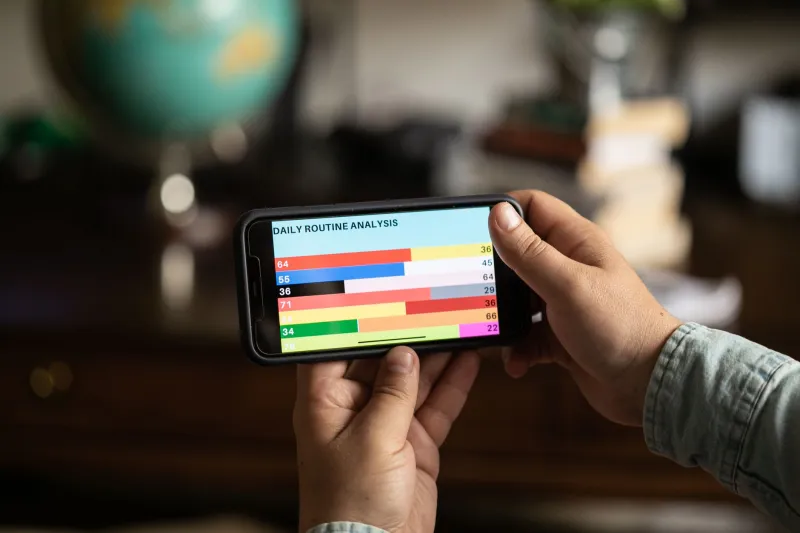
Every December, something strange happens across social media. Millions of people voluntarily hand over the most intimate data they own — a full year's worth of listening habits, emotional peaks, late-night spirals, and guilty-pleasure deep cuts — and post it for the world to see. Not because they have to. Because they want to.
Spotify Wrapped has become the annual music reckoning none of us can quit. And if you've ever felt a low-grade anxiety creeping in around November, wondering what your top artists are going to say about you this year, you're not alone. Wrapped isn't just a data visualization. It's a personality test with a share button attached, and the pressure to pass it has quietly changed the way a lot of us actually listen to music.
The Curated Self vs. The Actual Self
Here's the thing about Wrapped: it's supposed to be automatic. Spotify does the math, you get the results. No filtering, no editing, no choosing which songs make the cut. The whole pitch is radical honesty — this is what you actually listened to.
Except it's never quite that simple, is it?
Talk to enough people and a pattern emerges. The person who spent six months streaming a certain mainstream pop artist but switched to jazz playlists in October "just to balance things out." The guy who genuinely loves a much-mocked soft rock legend but has been stress-testing indie artists since September hoping to dilute the results. The person who listens to their most embarrassing playlist exclusively through a third-party app specifically to keep it off the official ledger.
We are, consciously or not, gaming our own data. And we're doing it because Wrapped has become less about remembering how your year sounded and more about what your year says about you to everyone watching.
Why We Share in the First Place
It's worth asking why Wrapped sharing took off the way it did. Music has always been personal. People used to guard their listening habits pretty closely — the CD binder you kept under the car seat, the playlist folder you renamed something cryptic on your laptop. The idea of broadcasting your full listening history would have felt borderline invasive ten years ago.
But Wrapped cracked something open. It reframed exposure as celebration. Instead of "here is everything you listened to," the presentation is "look how much you loved music this year." The slides are colorful and dynamic. There are superlatives and fun stats. It feels like a highlight reel rather than a confession.
And once sharing became normalized — once your timeline filled up with everyone else's Wrapped cards — opting out started to feel like you had something to hide. Which, of course, created an entirely new kind of pressure.
The 'Cool Wrapped' Problem
Spend any time on music-adjacent corners of social media in December and you'll notice the hierarchy. Certain artists and genres carry social currency. Others do not. A Wrapped dominated by critically acclaimed indie acts, legacy hip-hop, or boundary-pushing electronic artists tends to generate a specific kind of admiring response. A Wrapped headlined by, say, a ubiquitous radio pop act or a comfort-food country singer tends to generate... something else.
This is where it gets genuinely interesting from a music identity standpoint. JukeLog users talk about this constantly in our community threads — the gap between what you stream and what you'd be comfortable announcing. People describe a kind of pre-Wrapped audit in the fall months, a half-conscious recalibration of listening habits designed to produce a more presentable result.
Which raises a real question: if you're choosing what to stream based partly on how it'll look in December, are you actually discovering music anymore? Or are you curating an identity?
The Psychology Behind the Annual Reveal
There's a reason Wrapped works as a sharing mechanism when your weekly listening stats — which Spotify also provides through third-party tools — mostly don't. The annual format creates distance. A whole year of data feels like biography rather than surveillance. It's retrospective, which makes it easier to frame as storytelling.
Psychologically, there's also something about the finality of it. Once the year is over, the data is locked in. You can't change it. That permanence, weirdly, makes it easier to own. It shifts from "this is what I listen to" to "this is who I was this year" — and identity framed as a past self is somehow more shareable than identity framed as a present one.
But that framing is also where the self-deception gets cozy. "This is who I was" gives you narrative control. You can add context, make jokes about your top artist, lean into the irony of a surprising entry. The data becomes a character you're playing rather than a reflection you're reckoning with.
What Wrapped Actually Gets Right
For all the performance involved in sharing season, Wrapped does occasionally cut through the noise and catch something real. Those moments when a deep cut surfaces as a top song and you remember exactly why you had it on repeat. When a year's worth of late-night listening patterns reveals something about a chapter of your life you'd half-forgotten.
That's the version of Wrapped worth paying attention to — not the shareable card, but the private scroll through your own data before you decide what to post. The artists you'd never broadcast but who genuinely carried you through something. The genre rabbit hole you fell down in March that you've never mentioned to anyone.
That's where your actual relationship with music lives. Not in the highlight reel.
Log It Honestly, At Least Once
Here's a challenge worth considering this Wrapped season: before you start thinking about what your results say to your followers, sit with what they say to you. Log the real version somewhere — even if it's just in a private JukeLog entry or a note on your phone. Write down the artists you'd be embarrassed to post. The songs that showed up more than you expected. The listening habits that surprised you.
Because the music that actually shaped your year is more interesting than the music you'd choose to represent yourself. It's messier, more contradictory, and way more human.
Wrapped is a mirror. The question is whether you're looking into it or just using it to check your reflection before heading out the door.